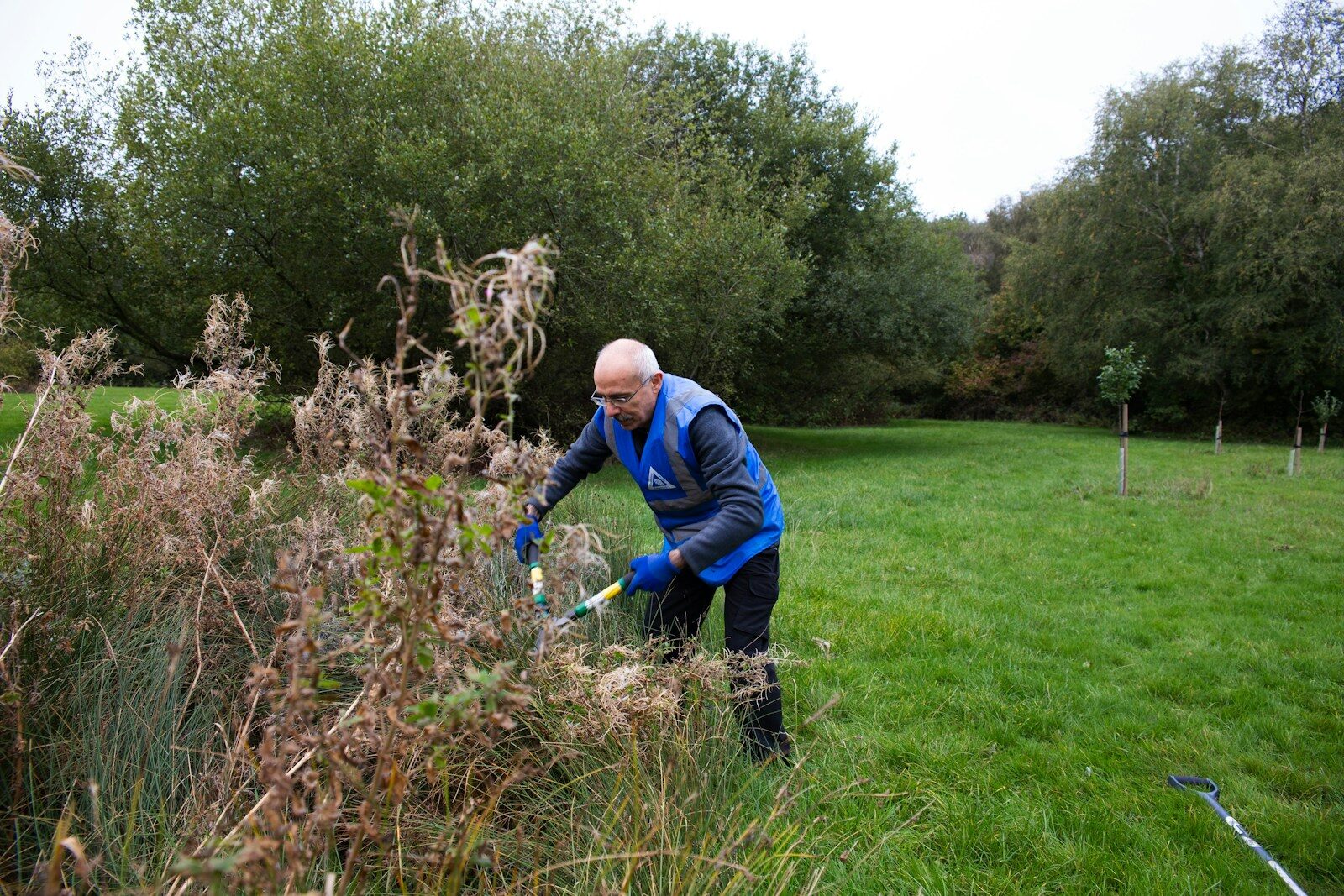
Our shrubs had gotten a bit out of control around the house, which had been troubling Marilyn. I told her I would come home early Tuesday to trim the trees and shrubs.
I got started, and within thirty minutes, my electric trimmer caught the extension cord and cut it in half.
Marilyn was gracious, but I could imagine what she might have been thinking: Would you just slow down? You wouldn’t do stupid stuff so often!
As we lost an hour of work, I’m sure the frustration was building. After all, the shrubs had gotten pretty bad, and she was working alongside a husband who is not particularly handy.
To make matters worse, the electrical outlet quit working. It took another hour to go to the store, buy a new extension cord, and get back to work using a different outlet.
Eventually, we finished one side of the house. We had about 400 pounds of tree limbs, leaves, and brush in my truck when I heard Marilyn say, “Oh no! My bracelet is gone!”
It was a valuable bracelet her mother had given her after her dad passed away. It carried a lot of sentimental meaning, and the thought of losing it was heartbreaking.
Not exactly comforting when you realize it could be somewhere in 400 pounds of brush, buried in the mulch, lying in the grass, or who knows where!
Talk about a needle in a haystack.
My first thought was, Why in the world were you trimming shrubs, pulling on roots, and cutting limbs while wearing that bracelet?
I was already frustrated by the time and money wasted on the extension cord. Now, we were facing the possibility of losing something precious to Marilyn.
It would have been easy to let our frustration spill over into criticism. I could have questioned her judgment, and she could have reminded me that the whole mess started when I cut through the extension cord. We both had plenty of opportunities to say something hurtful.
But we didn’t.
Instead, we chose to be gracious toward one another. Marilyn told me she was sorry I had to go get another extension cord and reminded me that what happened could happen to anyone. I told her how sorry I was that her bracelet was missing and that I would do everything I could to help find it.
We had a choice. We could focus on what had gone wrong and point fingers at each other, or we could focus on the problem and face it together.
Thankfully, we chose the latter.
We took every limb, leaf, and clipping out of my truck, but there was no bracelet. We crawled through the grass and searched the mulch over and over. Still, nothing.
Finally, I went inside, dejected and ready to give up.
Then I heard a faint voice yelling, “I found it!”
The bracelet was lying on the concrete driveway. Evidently, it had fallen off a limb, and Marilyn heard something as she was sweeping up.
What a relief! The bracelet was found, and what could have been a miserable day ended on a happy note.
But the bigger lesson had nothing to do with the bracelet.
When Frustration Meets Marriage
Marriage gives us plenty of opportunities to become frustrated with each other. Sometimes, it is the big things. Other times, it is the little, everyday mishaps that seem to pile up until we are ready to say something we will regret.
We know our spouse’s weaknesses. We know the habits that irritate us, the mistakes they tend to make, and the words that are most likely to sting. When we are frustrated, it can be tempting to let those thoughts escape our mouths.
We justify our criticism because we believe we have a good reason to be upset. We may even tell ourselves that our spouse needs to hear what we have to say.
But just because something is true doesn’t mean it needs to be said. And just because we feel frustrated doesn’t mean we should express every thought that crosses our minds.
Our words can either build up our spouse or add to the frustration that is already there.
Imagine how differently our afternoon could have unfolded if we had chosen criticism. I could have made Marilyn feel foolish for wearing the bracelet, and she could have made me feel incompetent for cutting the extension cord. Instead of working together to solve the problem, we would have been working against each other.
The missing bracelet was already a problem. We didn’t need to turn it into a marriage problem, too.
This is one of the ways we practice grace in marriage. We learn to pause before speaking, consider what our words will accomplish, and ask whether what we are about to say will help or hurt our spouse.
Sometimes, the wisest response is to say nothing at all.
Proverbs 21:23 says, “Whoever keeps his mouth and his tongue keeps himself out of trouble” (ESV).
James 1:19 also reminds us to be “quick to hear, slow to speak, slow to anger” (ESV).
These are not just good principles for avoiding arguments. They are practices that protect our marriages. They help us respond thoughtfully instead of reacting emotionally. They remind us that winning an argument is not nearly as important as protecting the relationship.
This doesn’t mean we should never address a problem or speak honestly about something that needs to change. Healthy marriages require honest conversations. But there is a difference between speaking the truth with love and using our frustration as permission to criticize.
We need to learn when to speak, how to speak, and when to let a thought remain unspoken.
The next time something goes wrong, take a moment before responding. Ask yourself: Will these words help us move forward, or will they simply make my spouse feel worse?
You may have every reason to be frustrated. You may even be right. But being right does not always mean saying everything you think.
Our afternoon of trimming shrubs was an absolute mess. Yet, because we chose grace over criticism, it became an opportunity to strengthen our marriage rather than damage it.
And that is a win worth celebrating.